

"Five Yellows, Three Whites." A children's rhyme runs: on the fifth day of the fifth month, pass the festival with Five Yellows and Three Whites. The yellows: realgar wine (rarely drunk in Wenzhou today), yellow croaker, cucumber, yellow eel, and salted duck egg yolk. The whites: water bamboo, salted egg white, and white-cut pork. Each has its season. Yellow croakers reach their peak condition in the fifth lunar month during their inshore spawning migration, with meat delicate enough to break at the touch of chopsticks. Eel, newly active after winter dormancy, is at its most substantial; a Wenzhou saying holds that "Dragon Boat eel is worth more than ginseng." Cucumber clears heat, water bamboo refreshes, and salted duck eggs cured since Qingming now yield rich, red oil. White-cut pork balances the yellows — yellow throughout requires white to complete it. As for zongzi (rice dumplings), Wenzhou locals consider them the staple, while the Five Yellows and Three Whites serve as the dishes; the two do not compete.
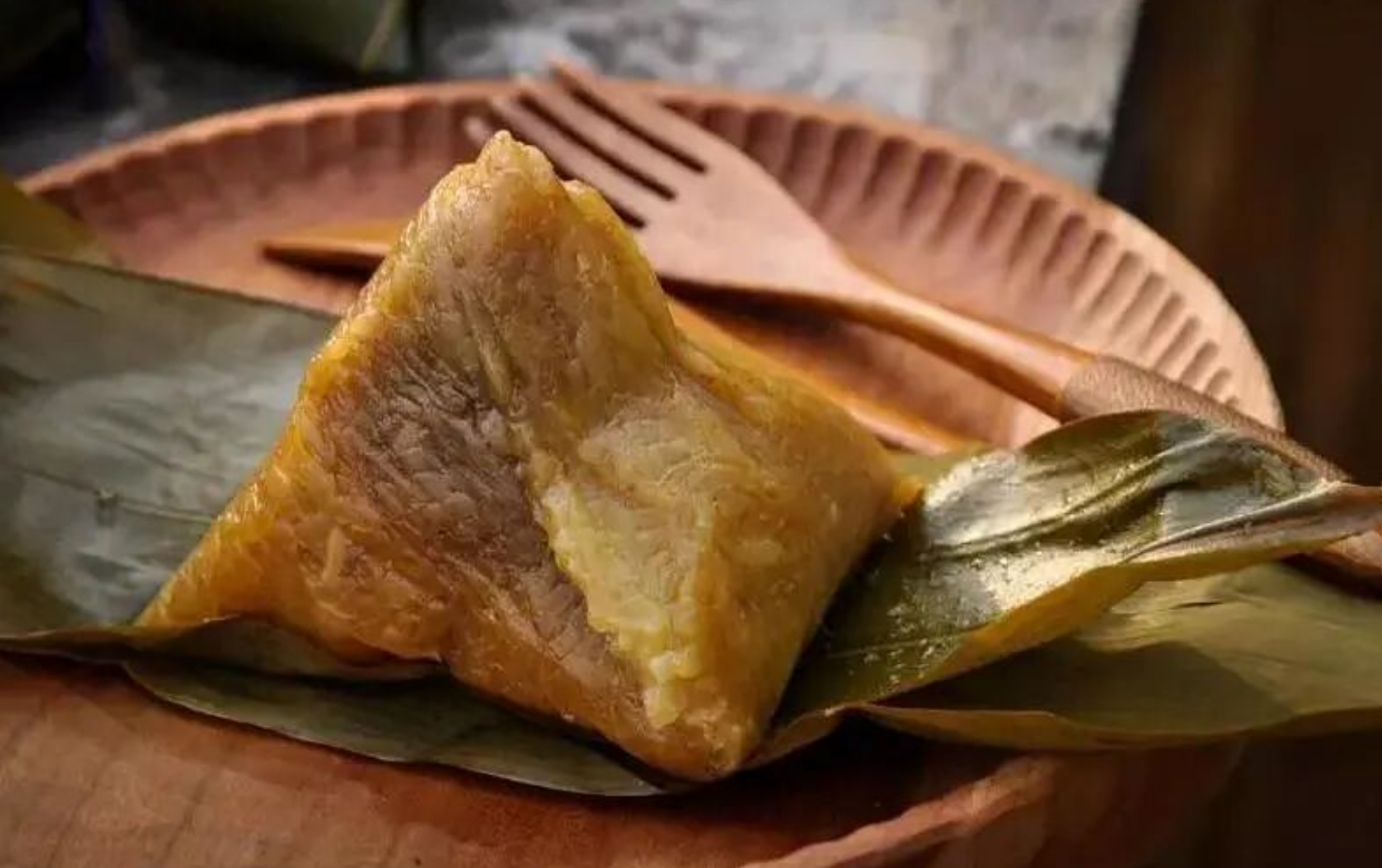
The ash-soaked dumpling. Wenzhou's most distinctive zongzi is the "ash-soaked" variety. Days before the festival, early rice straw cut from field edges is dried and burned to ash. The ash is wrapped in gauze inside a wooden tub and doused with boiling water. Once the liquid turns pale brown with a faint straw aroma, glutinous rice is soaked overnight. The rice emerges glossy and pale amber, carrying a woody flavor that is neither sweet nor salty — purely straw and ash. Older generations believed the lye possessed cleansing properties; it certainly preserved the food. Hung under eaves, ash-soaked zongzi kept for ten days or more before refrigeration existed. Wenzhou households tie the dumplings into a triangular axe shape, offering both sweet and savory fillings — bean paste or red dates on one side, pork or salted yolk on the other — distinguished by different-colored threads.
Chongwu's morning rituals. Locals refer to the festival as "Chongwu" — the fifth day of the fifth month, two fives stacked. Before dawn, mugwort and calamus are hung at every door: sword-shaped calamus leaves to ward off harm, and the bitter scent of mugwort to repel insects. May was regarded as a "poison month" and the fifth day a "poison day," requiring strict protection at the doorway. Children wear herbal sachets — stuffed with atractylodes, angelica, and clove — that swing as they walk. Adults write the character "king" (wang) on children's foreheads using realgar wine, invoking the tiger as king of beasts to deter misfortune. In Cangnan, children join the "hundred-grass harvest," ascending hills with elders to gather mugwort, bitter herbs, and honeysuckle, which are believed to hold peak potency on this day.
Wenzhou locals rarely express formal festival greetings. They simply say, "Chongwu has passed." These three words mark a seasonal shift: the yellow croaker run continues, bayberries are reddening, lychees are nearly ripe, and summer has officially arrived.