

Story
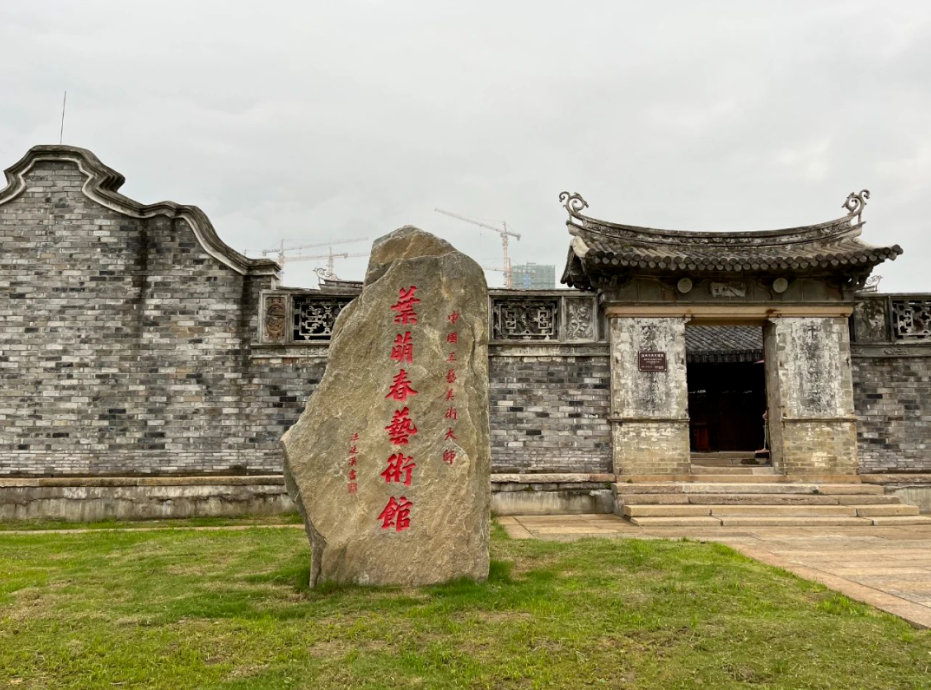
Carve: boxwood at the Ye Mengchun Art Museum. In Nanyang Park, Longwan District, the Ou-Yue Intangible Cultural Heritage Hundred-Family Workshop doubles as the Ye Mengchun Art Museum — 537 square metres holding more than 120 modern and contemporary boxwood carvings and Wenzhou stone carvings. The walls carry the region's carving lineage: works by three Chinese Arts and Crafts Masters — Ye Runzhou, Ye Mengchun, and Ye Xiaopeng — alongside nineteen provincial and municipal masters. Visitors can watch carving in progress, then take a chisel under a master's guidance in the workshop and try basic techniques. Free admission, with study and training events running regularly; open Tuesday to Sunday, 9:00–11:30 and 13:30–16:30.
Inlay: mother-of-pearl at the Dongtou Shell Carving Art Museum. This is China's first museum dedicated to the craft of luodian — inlaying shells into lacquer and wood. Its collection spans more than 1,200 pieces from the Tang dynasty to today, and the tour follows the whole process: selecting material, cutting, polishing, inlaying; in the experience zone, visitors can try a piece themselves. The museum runs regular educational programmes suited to families and student groups; open daytime, 09:00–16:00.
Print: wooden movable type and indigo-printed calico at Dongyuan Village, Ruian. This site carries heavy credentials: "Chinese Wooden Movable-Type Printing," on the UNESCO list of intangible cultural heritage in need of urgent safeguarding, and "Indigo-printed Calico," a national-level craft. At the Weijianshan experience point in Dongyuan Village, Pingyangkeng Town, visitors learn character selection, typesetting, inking, and signing before printing a piece by hand to take home; the workshop teaches traditional clamp-resist dyeing; open daytime, 09:00–16:00.
Throw: Ou kiln ceramics at Yongjia's Ouyi workshop. Next to the national heritage site of the Tang-dynasty Tantou kiln ruins, the Ouyi experience point in Ou Kiln Town keeps the firing tradition of Wenzhou's historic kilns. The 2,000-square-metre facility takes visitors through the full sequence: collecting clay, wedging, throwing on the wheel, trimming, drying, glazing, loading, and firing. The lesson ends with a vessel thrown by your own hands; open daytime, 09:00–16:00.
Press: yellow tea at Pingyang's nine-steam, nine-dry hall. In Xinlian Village, Shuitou Town, a three-floor, 1,050-square-metre hall is devoted to Pingyang Yellow Tea, a Zhejiang classic known for its "nine-steam, nine-dry" processing. The ground floor is the hands-on floor, with over 100 pieces of spreading and yellowing equipment for visitors to use; the second floor tells the tea's story, including the tea customs of the She ethnic community; the third is a training classroom for up to fifty learners. Come in the spring tea season, March to May, for tea-picking and tea-making.
Crystallise: 600 years of alum at the Wenzhou Alum Mine, Cangnan. The Wenzhou Alum Mine in Alum Mountain Town was once one of China's major industrial sites; its No. 100 crystallisation room is now a museum and workshop in one, keeping its Soviet-style facade. Visitors trace more than six centuries of mining and refining — from raw ore to crystal — and explore how industrial technology meets heritage; the experience zone offers hands-on experiments. It sits beside the Alum Capital Gem Museum and the Ore Museum; open daytime, 09:00–16:00.
Eat: opera and food at Qingye · Kunyan. In Fenglin Town, Yongjia, a century-old opera stage has been built into a restaurant — the first in Yongjia themed around Yongkun, the local branch of Kunqu opera. The menu draws on Nanxi River heritage foods such as wheat cakes and Shagang rice noodles; at dinner, professional performers appear on stage from time to time, and dishes carry opera themes. After the meal, guests can change into hanfu for photographs — a closing note that shows how far the "heritage you can do" idea travels: from the workshop to the table. Best in the evening, 17:00–21:00; check the performance schedule in advance.
Blend as one. Carving, inlay, printing, throwing, pressing, crystallising, dining: each place turns a listed heritage item into an action a visitor can perform in an afternoon. The craft stops being a title on a list and becomes something done, once, by your own hand.