

Story
In Mache Village, along the Nanxi River in Yongjia, Wenzhou, the comforting aroma of wheat cakes has drifted through the air for more than a century. For 101-year-old Pan Chunxiang, that aroma is far more than a scent — it has been the defining rhythm of her entire life. Counting from the age of ten when she first learned the craft, she has lived alongside this tradition for nearly ninety years.
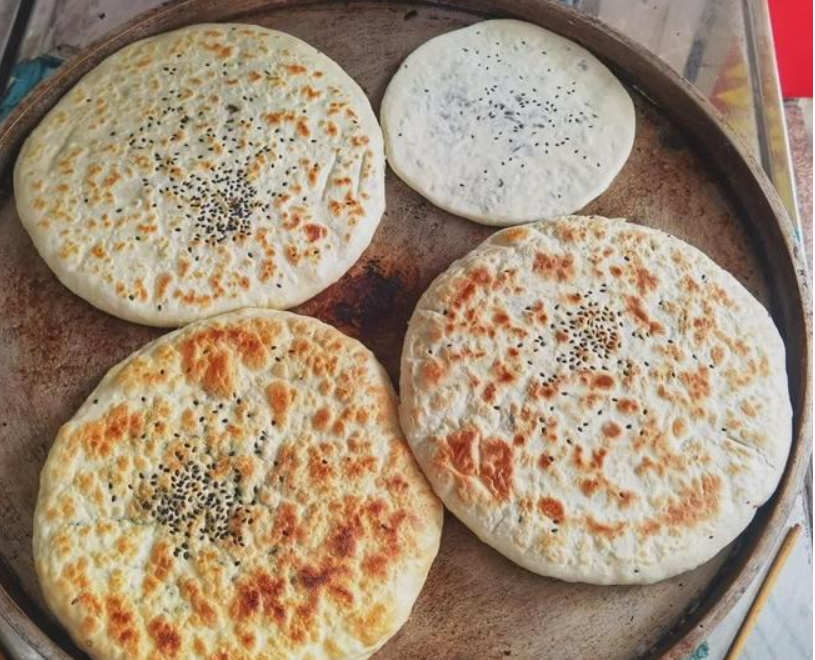
Kneading, resting the dough, rolling it thin, wrapping the filling, and searing it on a cast-iron skillet — in a quarter of an hour, a golden, crispy wheat cake emerges from the pan. Pan's cakes feature a wafer-thin crust and a generous filling, embodying the purest rustic flavour. On her workbench are ingredients she prepares by hand: home-pickled vegetables paired with fresh pork. This remains the classic Yongjia combination: local high-quality wheat flour for the dough, filled with preserved mustard greens, pickled vegetables, and fresh pork, then baked over a cast-iron skillet until golden crisp on the outside and tender within.
The Yongjia wheat cake is one of Wenzhou's most iconic traditional foods, with a history tracing back over a thousand years to the Tang and Song dynasties. Legend has it that a villager named Zhu, from Yongjia's Huatan Village, stumbled upon the recipe by accident — discovering that wrapping salted greens and fresh pork in dough and pan-frying it created a delicious meal. In Yongjia, wheat cakes were once an indispensable dry ration for working people travelling long distances: substantial in size, each weighing a full 500 grams, and capable of keeping fresh for days. As the Nanxi River flowed long and mountain roads stretched far, travellers carried wheat cakes with them across the country. It has long since evolved beyond mere sustenance into a cherished local cultural symbol.
For Pan's children, however, the wheat cake holds a deeper, far more personal affection. In July 2026, her son, who had spent years doing business away from home, returned to the family house in Maché Village and tasted his mother's handmade cake for the first time in years. Deeply moved, he said: "I haven't had my mother's wheat cake in years. I have travelled far and wide, but no delicacy in the world can compare to this one bite of home."
In January 2023, the craft of making Yongjia wheat cakes was officially inscribed on the sixth batch of Zhejiang's provincial intangible cultural heritage representative list. Today, Yongjia County has established a dedicated industry steering group and a wheat cake association, issued unified quality standards, and hosted skills training workshops. Commercial brands such as "Wangdama" and "Laoshimu" have flourished, with Wang Yongliang named as the official provincial inheritor. Pan Chunxiang's name is absent from the register. Yet through nearly ninety years of quiet persistence, she has guarded the purest core of the craft in the simplest way possible — honest ingredients, painstaking handwork, and the authentic taste of home.
At 101, Pan still bakes a few wheat cakes whenever the mood strikes. For her, making wheat cakes is neither a public performance nor an official duty — it is life itself: the taste of a mother cooking for her children, a centenarian's most affectionate tribute to her native soil. As her son so aptly put it, no matter how far one travels, no amount of fine dining can ever replace that one bite of home.