

Wenzhou lies at roughly 120°E, 28°N, the southernmost city in Zhejiang province. Hills enclose it on three sides; the East China Sea opens to the east; the Ou, the Feiyun and the Ao rivers run down from the mountains into the sea. Three landscapes, three sources of food, each arriving in its own time. This is where Ou cuisine's basic flavour — freshness — begins.
The taste for it is old. In the third century, the scholar Zhang Hua recorded that the people of the southeast prized fish, clams, snails and oysters "and never found them rank". Inland China once treated the sea's saltiness as something to avoid; the people of the ancient Ou region, living between mountain and sea, embraced it early.
The sea: fishing grounds and mudflats
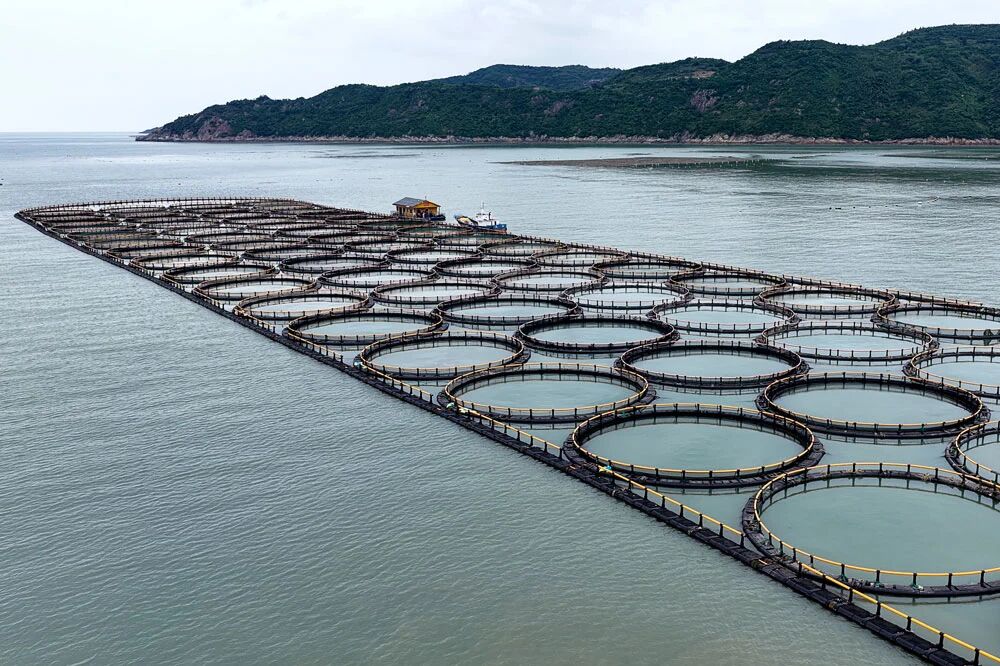
Wenzhou's land area is 12,102 km?; its sea area, 8,649 km? — its sea area is nearly 70 percent the size of its land area. Yueqing Bay, the Dongtou Islands and the Nanji Islands line up along a coastal fishing belt. Nanji is one of the northernmost places where large yellow croaker can winter naturally; the Taiwan Warm Current meets the Zhejiang–Fujian coastal current there, creating rich waters for the fish. Croaker is the pillar of a Wenzhou banquet — "no banquet is complete without croaker" — and in the eighth lunar month the returning fish are at their fattest: the "osmanthus croaker".
Closer to shore, the mudflats are another pantry. Razor clams, mud snails and mudskippers live in the silt, and on Lingkun Island a rhyme still tells you what to eat when: "First month, small crabs; second, swimming crabs; third, mudskippers and mantis shrimp; by the fourth, green mud crabs are worth their weight in meat." Along the Cangnan coast, farmers tend a "garden on the sea" — Cangnan calls itself China's laver capital — and the first cut of the season, from late November, is the tenderest and most intensely flavoured.
Even by the Southern Song, Wenzhou seafood reached big-city tables. Wu Zimu's Mengliang Lu (Dreaming of the Capital) lists more than forty kinds of seafood — dried scallops, shrimp, oysters, green mud crabs, swimming crabs, clams — shipped from Wenzhou to Lin'an, the capital.
The rivers: plains and wetlands
Where the three rivers meet the sea, they have laid down plains and wetlands — bringing another range of ingredients. The Records of the Grand Historian describes the ancient Chu–Yue region as "rice for meals, fish for broth": rice and seafood meeting in one bowl. The rice grown on these plains becomes rice noodles, New Year cakes and glutinous rice dishes — the backbone of the city's daily meals and street snacks.
In the watery land near the river mouth, the Sanyang Wetland has grown Ou mandarins for over a thousand years. The fruit has a flavour unlike ordinary mandarins: sweet, but with a hint of bitterness first. Locals call it "bitter first, sweet after". Picked around Minor Snow, it is stored for twenty-odd days until the bitterness turns to sweetness — just in time for the New Year.
The hills: seasonal produce
Away from coast and river, the hills of southern Zhejiang pass over the third set of produce. At the foot of the Yandang Mountains, Chashan grows the bayberry Wenzhou is proud of — "red fruit, green stem", a green nub at the fruit's base. Sheltered on three sides, the little basin wakes early; the fruit reaches market ten days to a fortnight before neighbouring regions, ready in early June. Yongjia's Wuniuzao tea is built on the same earliness — it comes to market about a month before West Lake Longjing, earning the name "the first tea of the Jiangnan spring". Wencheng's glutinous yam has grown in the hills for nearly a thousand years, and Wencheng is the only place in Zhejiang to grow it at scale. Taishun's Sanbeixiang tea grows above 800 metres in cloud, named for keeping its fragrance through three steepings.
A calendar of arriving seasonsPut all of these together, and Wenzhou has its own food calendar: Wuniuzao tea opens in February, bayberries redden in June, croaker fattens in the osmanthus month of August, the first laver is cut in November, and Ou mandarins come down around Minor Snow and keep until the New Year. Mountain, sea and river each keep their own time; freshness arrives on schedule.
The stove catches this freshness. What happens next is a matter of craft.